Moving to Brazil does not begin on the day you board the plane. Some arrangements can be made while you are still abroad, while others will be much easier to deal with once you arrive.
Immigration status, documents, CPF, healthcare, accommodation, mobile phone, transport and payment methods: you do not need to sort everything out immediately, but a little forward planning can prevent a great deal of unnecessary difficulty.
This article is not intended to explain every administrative procedure in detail. Instead, we will look at the main steps to consider before you leave and during your first few weeks in Brazil, with links to our more detailed guides where we have already covered a subject.
Contents
Plan ahead for your immigration status
Before moving, you naturally need to understand the conditions under which you can enter and remain in Brazil.
The rules depend on factors including your nationality, the purpose and duration of your stay and the type of residence you intend to apply for. Entering Brazil as a visitor should therefore not be confused with having permission to reside in the country.
If you genuinely intend to settle in Brazil, it is better to look into this well in advance and, above all, not to wait until the final days of your authorised stay before seeking information.
Employment, investment, family reunification, retirement and other circumstances may involve different procedures and documents. There is therefore no single list that applies to every foreign national.
If you are planning to settle permanently, advice from an immigration professional can be particularly useful when your circumstances require a residence or regularisation procedure.
Prepare the necessary documents
Some of the preparation can begin before you even leave your home country.
Depending on the procedure involved, you may need documents such as a birth certificate, criminal record certificate, marriage certificate or other documents relating to your personal circumstances.
Depending on their country of origin and how they will be used in Brazil, some foreign documents may need to meet specific formal requirements. This may include an apostille or legalisation, as well as translation in Brazil by a sworn public translator where required.
However, there is little point in collecting a large pile of documents without first knowing exactly what you need. Requirements vary according to the procedure, and some documents must have been issued within a specified period.
The most efficient approach is therefore to identify the procedure that applies to your circumstances first, then check the exact list of documents and their validity requirements before obtaining them.
Obtain a CPF
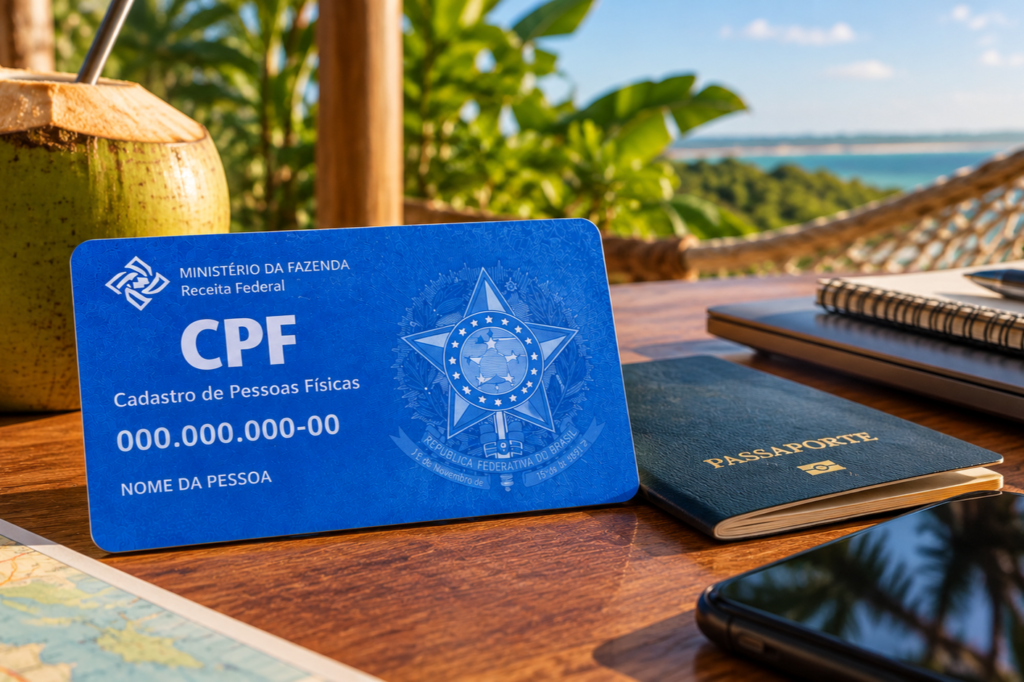
The CPF (Cadastro de Pessoas Físicas) is one of the first things to consider if you intend to establish your everyday life in Brazil.
It is used in a wide range of situations, including administrative procedures, contracts, purchases, financial services, telecommunications and dealings with many different businesses.
A foreign national can obtain a CPF without being resident in Brazil. It is also possible to apply from abroad through a Brazilian consular office.
Having your CPF before you move can therefore be particularly useful.
A CPF is not, however, a visa or a residence permit.
Obtaining a CPF in Brazil: what is it for and how do you get one? →
Create your gov.br account
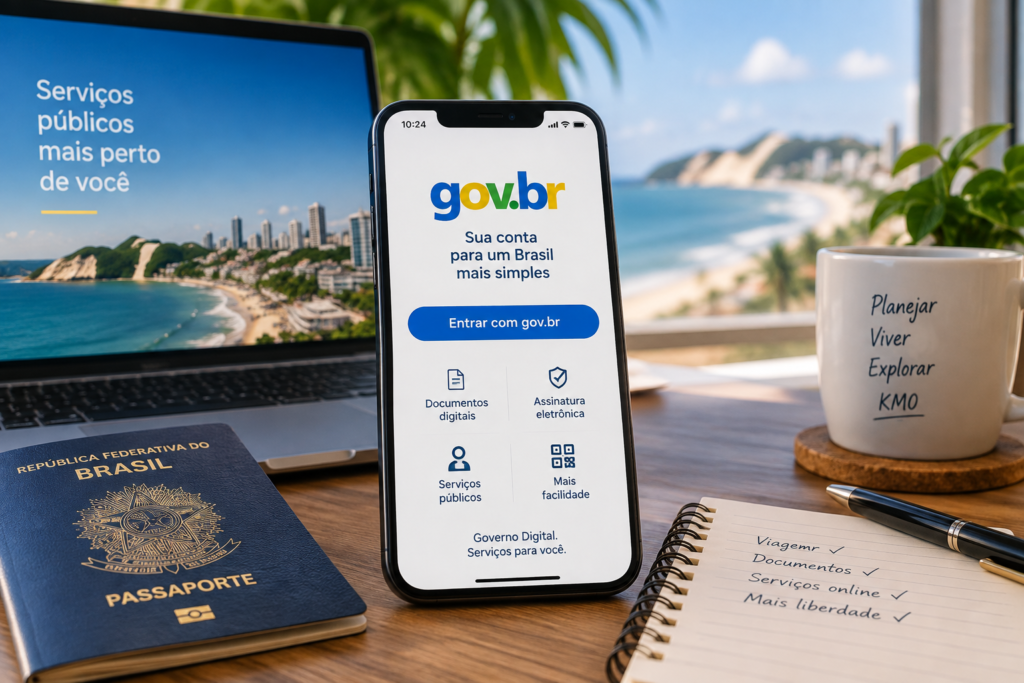
Once you have obtained your CPF, it is also worth creating your gov.br account.
This digital identity gives you online access to a wide range of Brazilian public services.
New arrivals from abroad should be aware that creating an account does not necessarily mean that all its features will be available immediately. gov.br uses different verification levels — Bronze, Prata and Ouro — and some services require a higher level.
If you plan to return abroad temporarily while procedures are still under way in Brazil, check your account level and validation options before leaving. Being able to access certain services or sign a document electronically from abroad can prove extremely useful.
gov.br account: what is it for and how does it work? →
Arrange healthcare cover
Healthcare is another matter worth considering before you leave.
During the transition period, international insurance or healthcare cover suitable for your stay in Brazil can provide an initial solution. Once you are settled, you can explore the different options available locally according to your circumstances and needs.
Before a longer stay, it is also sensible to check the health recommendations for the regions you intend to visit and, where appropriate, discuss them with a healthcare professional.
Brazil is a vast country: health needs and recommendations can vary considerably depending on the region and the nature of your stay.
Start with temporary accommodation
If you are planning to settle permanently in an area, we would not recommend buying a property immediately after arriving.
Photographs, videos and a few days on holiday do not really tell you what it is like to live in a neighbourhood day to day.
Our advice is to arrange temporary accommodation for at least a month, perhaps in a holiday rental, aparthotel or similar accommodation.
Use this period to live normally: go shopping, test your journeys, see what the neighbourhood is like at different times of day, understand the distances involved and explore several areas.
If you decide to stay longer, you can then consider a longer-term rental.
Renting before buying gives you time to get to know the area with far less pressure and make a better-informed property decision.
Prepare to speak Portuguese
In tourist areas, you will naturally come across people who speak English and sometimes other languages.
But when you actually live in Brazil, Portuguese quickly becomes essential.
A tradesperson, neighbour, shop assistant or someone you deal with in a public office will not necessarily speak English — let alone French.
You do not need to be fluent before you arrive. Learning some basic Portuguese before you leave and continuing to improve once you are there will, however, make everyday life and integration considerably easier.
Translation tools can help in specific situations, but being able to communicate directly makes an increasing difference to everyday life.
Get a Brazilian mobile number
There is no need to give up your European number as soon as you arrive.
In fact, keeping it can be very useful if your banks or other European services still use it to send verification codes.
However, a Brazilian mobile line quickly becomes useful, particularly for accessing local mobile data without roaming charges and for using services or forms that require a Brazilian-format telephone number.
With a Dual SIM or eSIM phone, both lines can coexist perfectly well during this transition period. Your European line remains available when you need it, while your Brazilian line provides the mobile data you use day to day.
WhatsApp also plays an enormous role in everyday and professional life in Brazil. Your WhatsApp account can remain linked to your old European number while using the data connection provided by your new Brazilian mobile line.
WhatsApp in Brazil: much more than a messaging app →
Plan how you will get around
Distances can be surprising when you first arrive in Brazil.
The number of kilometres alone does not always give a good indication of how long a journey will take, and transport options vary considerably depending on where you choose to live.
During your first few weeks, ride-hailing apps such as Uber, locally available transport or a hire car can help you explore the area before deciding whether you actually need to buy a vehicle.
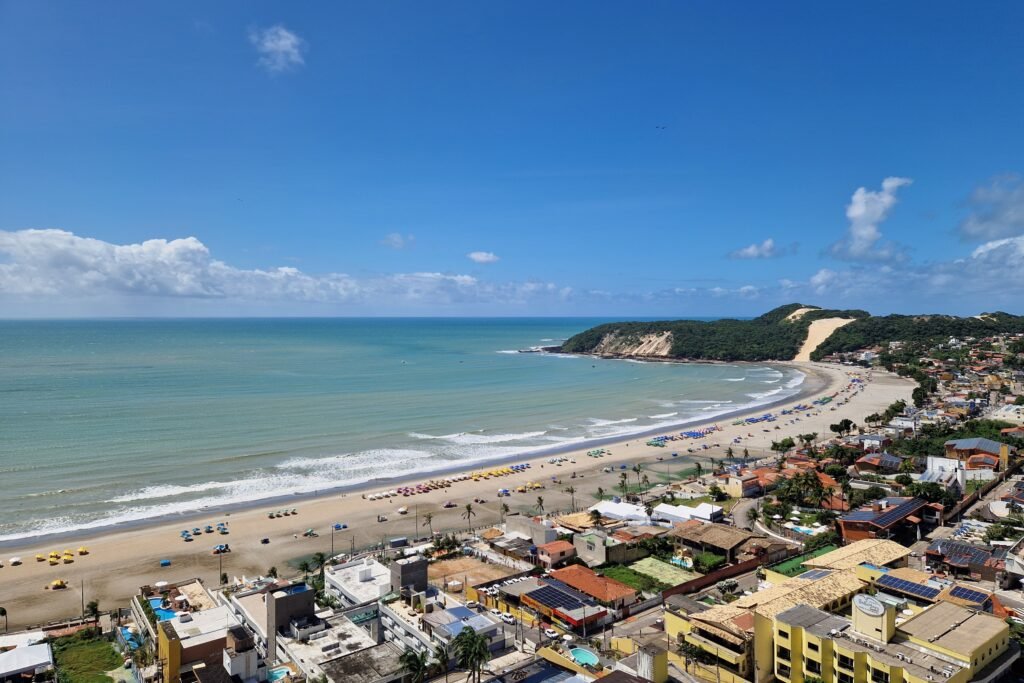
In Rio Grande do Norte, for example, someone living in a central neighbourhood of Natal will have very different transport needs from someone living in a less urban or more remote area.
Take some time to understand your everyday journeys before investing in a car or motorbike.
Plan your payment methods
When you first arrive, opening a Brazilian bank account can be difficult while your residence status has not yet been regularised. In our experience, the banks we approached, including several digital banks, required foreign customers to have an RNM (Registro Nacional Migratório) before opening an account.
It is therefore important to have alternatives during this transition period.
International services such as Wise or Revolut can be particularly useful. They allow you to continue using funds held abroad, exchange currencies and make payments in Brazil using an international card.
We did, however, find one interesting exception: Banco Rendimento. In our case, we were able to open an account entirely online before obtaining our RNM, using a passport, CPF and evidence of income from abroad.
The free account already allowed us to make payments using Pix, which is particularly useful in Brazil. A bank card was also available by choosing a paid option. This gave us access to a genuinely Brazilian payment method relatively quickly, while the other banks we had approached required an RNM.
As offers, charges and account-opening requirements can change, it is naturally advisable to check the bank's current terms directly before applying.
Once your residence has been regularised and you have obtained your RNM, access to other Brazilian banks becomes considerably easier. You can then choose the institution that best suits your needs while continuing to use Pix, now one of the main ways people pay for everyday purchases and services in Brazil.
Make the most of your first few weeks
A successful move does not mean completing every administrative procedure as quickly as possible.
We would suggest approaching the process in stages:
Before you leave: check your immigration status, identify the documents you will need, arrange healthcare cover and, if possible, obtain your CPF.
When you arrive: settle into temporary accommodation, obtain a Brazilian mobile line and local mobile data, create or check your gov.br account and start getting to know your surroundings.
During the first few weeks: make progress with your immigration regularisation, understand your transport needs, explore the neighbourhoods that suit you and, once you have obtained your RNM, consider opening an account with another Brazilian bank.
Only then: make the more significant commitments, such as taking a long-term rental, buying a vehicle or perhaps purchasing a property.
The most important thing is not to try to recreate immediately everything exactly as it worked in your home country. First give yourself time to understand how things work in Brazil and in the particular region where you intend to live.
This period of adjustment can help you avoid some mistakes, but above all it allows you to build your new life in Brazil gradually, in a way that genuinely suits your plans.